What Headless Analytics Means for Supabase Teams
Headless analytics separates governed metrics and datasets from any single dashboard, making them available through APIs or MCP to human tools and AI agents. For Supabase teams seeking API control without an opinionated frontend, the architectural answer is a shared analytics backend rather than direct agent access to production Postgres. Its purpose is to define numbers once, protect the application database, and serve the same answers wherever they are needed.
Why analytics architecture became an infrastructure question in 2026
Informatica exposes governed data capabilities through MCP, while Salesforce and ZoomInfo position headless data as infrastructure that agents can consume. Analytics now depends on where the data logic lives as well as which interface displays it. Supabase builders are entering a live architectural shift rather than waiting for a speculative category to develop.
Anthropic open-sourced MCP, the Model Context Protocol, in November 2024 to standardize connections between AI models and external tools, databases, and APIs. In December 2025, Anthropic donated it to the Agentic AI Foundation under the Linux Foundation, co-founded by Anthropic, Block, and OpenAI. Google, Microsoft, AWS, Cloudflare, and Bloomberg supported the foundation. That move established a shared institutional home for a protocol previously associated with one vendor.
What headless analytics actually means as an architectural pattern
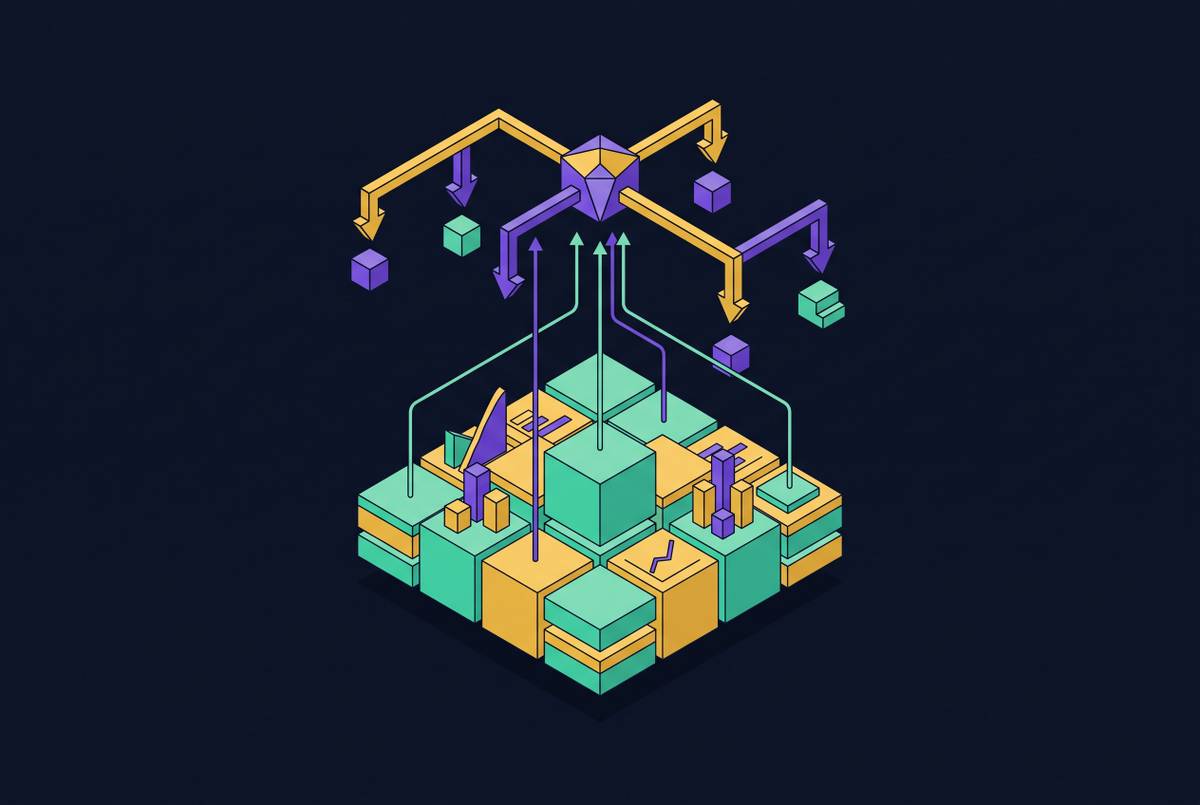
The term borrows its structure from headless CMS architecture. A headless CMS stores and governs content without tying it to a particular rendering layer. Headless analytics separates data in the same way, modeling and serving metrics apart from how they are shown. A dashboard, Slack bot, AI agent, or investor report consumes the modeled answer.
Mechanically, an MCP server provides the interface through which compatible tools discover and invoke data capabilities. Informatica describes capabilities including fetching governed data and checking data quality as services available to agent workflows. The important distinction from an ordinary API is discovery and description. APIs expose operations but assume the caller knows which endpoint to use, against which object, and in what sequence. An MCP layer describes what a capability does and what it needs, giving an agent a basis for choosing the appropriate operation.
Metrics such as monthly active users are defined once in code, so downstream tools get the same values. The interface becomes a consumer of analytics. For teams already running on Postgres, that distinction has a specific implication for how they extend their existing database.
Why Supabase teams sit at the center of this shift rather than the edge of it
Supabase teams already hold their operational data in Postgres, often without dedicated data engineering staff. Adding agents creates another consumer of the same database that serves the application. Supabase publishes Postgres best practices specifically for AI coding agents, covering query performance, connection management, security, schema design, and access patterns.
The constraints are concrete. Each Postgres connection consumes meaningful RAM, so a pooler such as PgBouncer lets concurrent users share a smaller pool. Supabase describes transaction mode as suitable for most applications unless prepared statements or temporary tables are needed. Pooling addresses connection pressure, while expensive analytical queries on the primary database still compete with transactional work.
Supabase’s guidance separates those concerns through materialized views or caches for expensive repeated reads and read replicas for read-heavy paths. Indexes on WHERE and JOIN columns make queries faster, while composite and covering indexes help with more specific access patterns. These practices matter regardless of the consumer. But when agents are involved, performance tuning alone cannot show whether access is safe or the answer is correct.
What happens when AI agents touch a production database without a governed layer in between
An agent can keep executing a failing strategy without recognizing that it should stop. In a documented market-research pipeline, an Analyzer and a Verifier entered a ping-pong loop that accrued $47,000 in external API fees over 11 days before the fees became visible in a billing dashboard. The architectural lesson of this API-cost failure nevertheless applies to database access because prompting is not a substitute for infrastructure-level rate ceilings and query-cost guards.
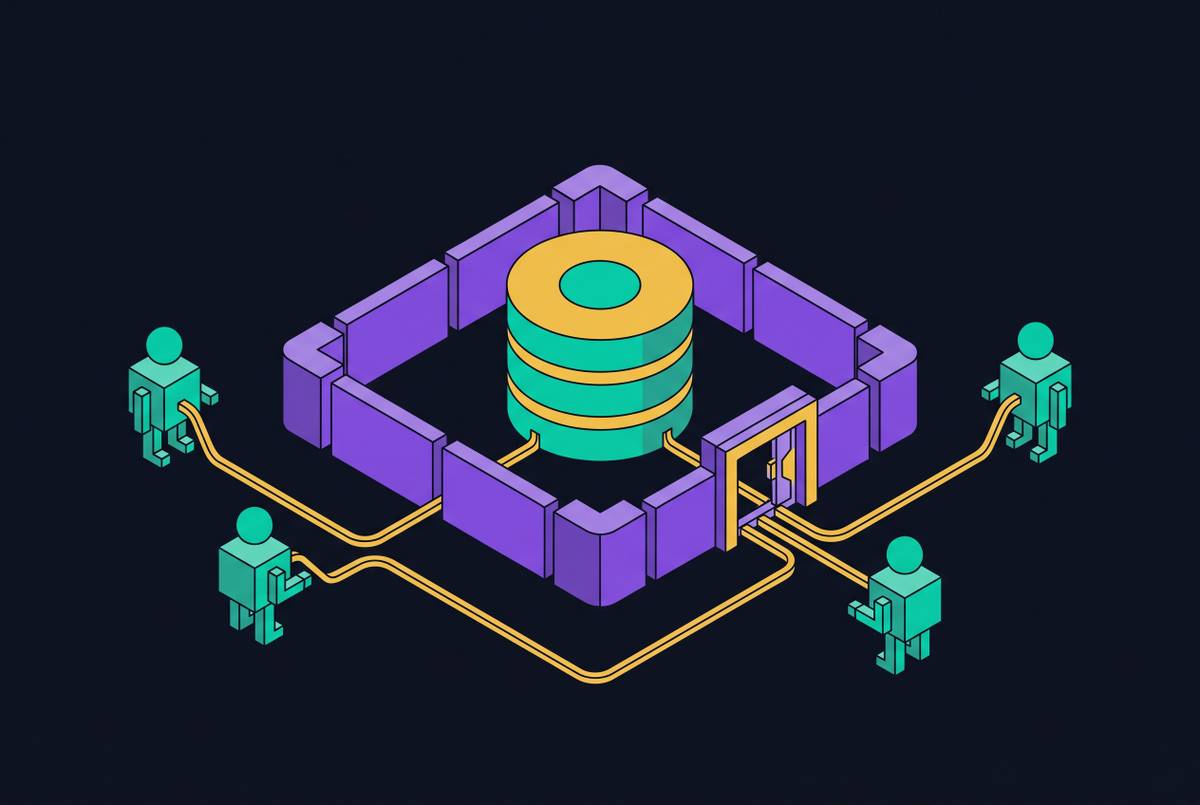
The security patterns address a different part of the problem. Supabase’s best practices call for routing agent queries through a centralized gateway that enforces permissions and logs access. Analytical queries should run on read replicas instead of the primary database, and purpose-specific users should have only the permissions they need. Production database credentials should never be put in agent configuration. Together, these controls constrain what an agent can reach rather than relying on its instructions to behave responsibly.
Governance also has to cover how tools keep working with live data sources and external APIs. Middleware that caches or stores third-party data can introduce compliance liabilities involving SOC 2, HIPAA, and GDPR. Microsoft open-sourced the Agent Governance Toolkit on April 2, 2026 under MIT license, illustrating the development of controls around these risks. Read-only access, governed permissions, pre-modeled data, and query-cost ceilings bring the safety case toward the same architecture as headless analytics, though consistent data definitions remain a separate requirement.
Why definitional drift, not tooling, is the real failure mode for founder-run data
A team can restrict access correctly and still distribute incompatible numbers. One engineer calculates revenue with SUM(revenue), while another uses SUM(amount_captured), and Q2 revenue differs materially between outputs. Another dashboard gives a competing definition another place to appear.
The first requirement is an agreed formula. Shared metrics such as revenue, CAC, LTV, and churn need written definitions that finance and marketing accept. Most B2B SaaS startups need five or fewer actionable metrics, namely CAC, LTV, monthly churn, ARR, and gross margin. Each CEO dashboard metric should reconcile to its source, with ARR from the billing system, cash from the bank, and product usage from the analytics layer.
This discipline does not require a dedicated data team. Objection.ai shows how this can work, with trustworthy, board-ready numbers and no data hire. But teams that rely on agreement alone to keep definitions in line still have to coordinate whenever they add a report or tool. A governed dataset turns that agreement into a shared calculation. When every surface consumes the same modeled output rather than recomputing it, divergence between those consumers becomes structurally impossible.
What analytics backend gives Supabase teams API control without a fixed frontend
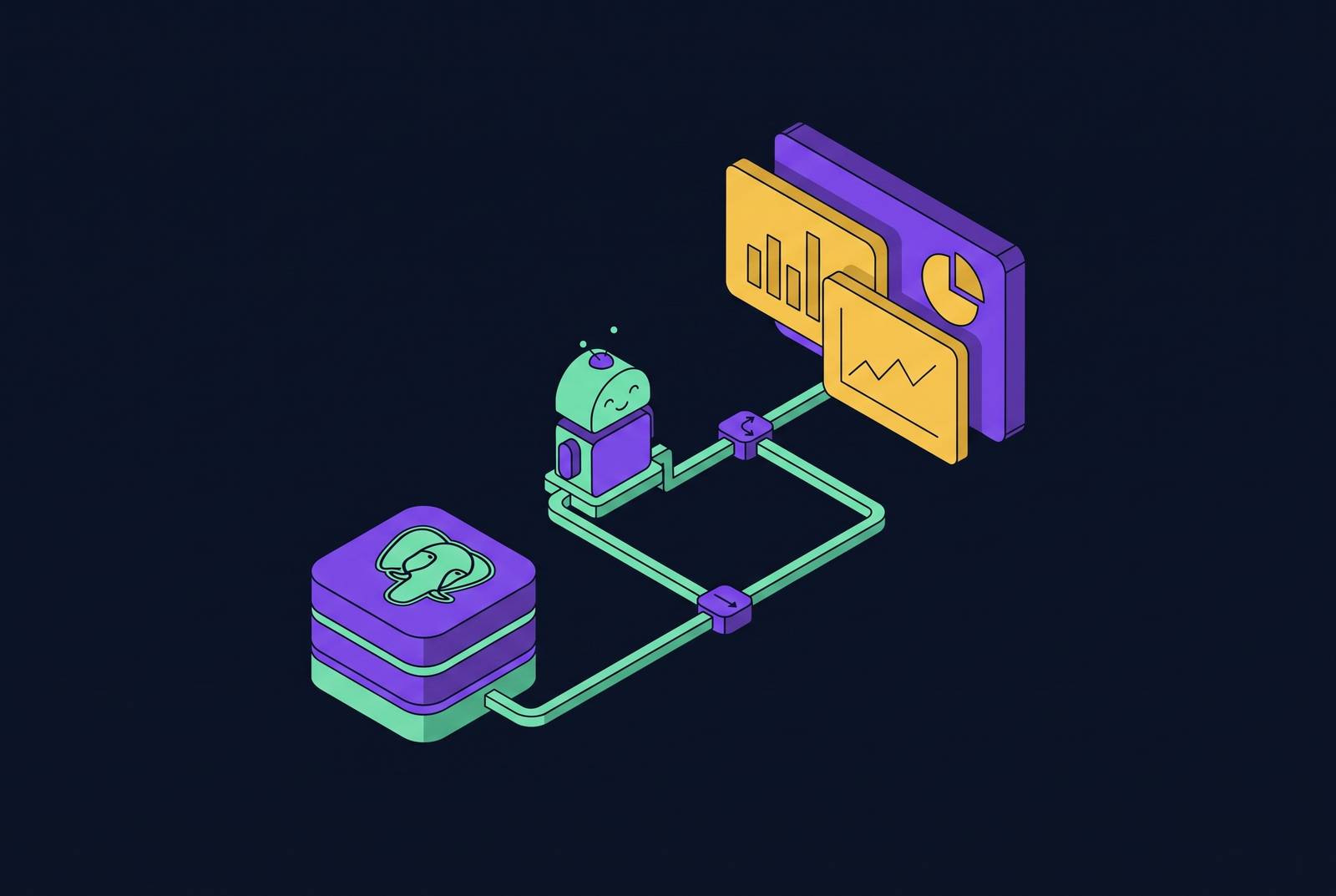
For a Supabase team, this backend can extend Postgres without requiring a separate warehouse, ETL pipelines, or a data engineering hire. Postgres can be the home for analytics without production Postgres having to serve every analytical request. Pre-calculated outputs preserve the connection to operational data while moving consumption away from the application database. That separation addresses both workload pressure and the need for a common answer.
Dreambase implements this pattern as a shared data layer that pre-calculates metrics and governs datasets in Parquet format queryable through DuckDB. It exposes those capabilities through a single MCP server, allowing compatible agents and human tools to discover and invoke them without custom integration code or direct database access. Agents query the governed datasets. This keeps analytics requests from agents out of the production connection pool and production credentials out of agent configuration.
In this model, which Dreambase offers for existing Supabase projects without ETL or schema changes, business metrics are defined once in code and served to dashboards, agents, reports, and scheduled outputs. Reports can reach an inbox, Slack, or a phone. The architectural value is not another destination for analysis, but a reusable source that leaves presentation to the consuming surface.
What AI analyst agents can safely do once the governed data layer exists
A governed foundation lets analyst agents watch data, explain metric changes in plain language, and take a next action that their permissions allow. Without that foundation, smooth explanations can hide inputs that disagree. With it, recurring analysis begins from a shared definition. The layer establishes the data contract, though it does not eliminate model errors or the need to govern actions.
Tools shipping in 2026 illustrate different parts of this workflow. Julius AI starts at $20/month, computes results before writing its report, and offers Scheduled Runs for recurring analysis. ThoughtSpot Sage connects to cloud data warehouses for search-driven, natural-language BI at enterprise scale. DataGPT returns charts and summaries from conversational questions for teams seeking access without data specialists. These products help people analyze and use data, while a layer such as Dreambase gives Supabase teams the governed inputs those tools need.
Implementation still takes work. Data preparation, AI training, prompt engineering, and user adoption have realistic timelines measured in months. AI query load can also increase warehouse costs, strengthening the case for pre-calculated datasets that are cheap to query through DuckDB. Salesforce’s Data 360 Headless example describes a physician network whose agents answer clinical questions using a “physician-curated ontology”. The generative responses have a structured foundation governed by humans, locating trust in the data layer.
The strongest objection to headless analytics and where it actually applies
A dashboard gives someone a surface to inspect and debug. A governed data layer, MCP endpoints, and agent workflows introduce boundaries that a small team must understand. Even when it is called infrastructure, the team still has to run it.
The criticism of headless MCP layers as “solution-first solutions” therefore has real force. A team with a working dashboard, consistent metrics, and no agents reading its data has no urgent reason to add another layer. In that case, the architecture introduces complexity before establishing a need. Protocol maturity adds another concern because native session memory and stateful multi-turn workflows remain on MCP’s roadmap and are absent from the current specification.
The balance changes when agents already access data or will do so soon. Complexity then arrives either through a deliberate governed boundary or through ad-hoc queries against production Postgres. MCP’s 97 million monthly SDK downloads, 10,000+ production servers, and foundation governance indicate substantial adoption, but they do not erase implementation risk. They support a narrower conclusion that protocol immaturity is not necessarily the largest risk for a team already exposing production data to agents.
Deciding whether a headless analytics layer is the right next step for your Supabase project
The decision depends on whether agents already read or will soon read from the Postgres database, and whether tools or team members use different metric definitions. When agent access and definitional drift coexist, a governed layer addresses two current problems. Agents need constrained access to consistent data, while human consumers need calculations that do not change with the reporting tool. Neither requirement depends on adopting a new dashboard.
If agents are not yet part of the workflow and metrics are consistent, the complexity objection applies. Where definitions remain ambiguous, the immediate work is to write down five or fewer metrics that finance and product agree on. Technology cannot settle an unresolved business definition. A shared layer only becomes authoritative when the formulas it serves have that agreement behind them.
For a Supabase team ready to proceed, Dreambase is an option built for this starting point without a warehouse, ETL, or schema changes. The minimum viable architecture is more important than the product choice. Pre-calculate the metrics the business runs on, including ARR, churn, CAC, LTV, and gross margin. Store the outputs in governed datasets that production Postgres is not responsible for serving, then expose them through a single MCP endpoint that agents and human tools can call.